About the route
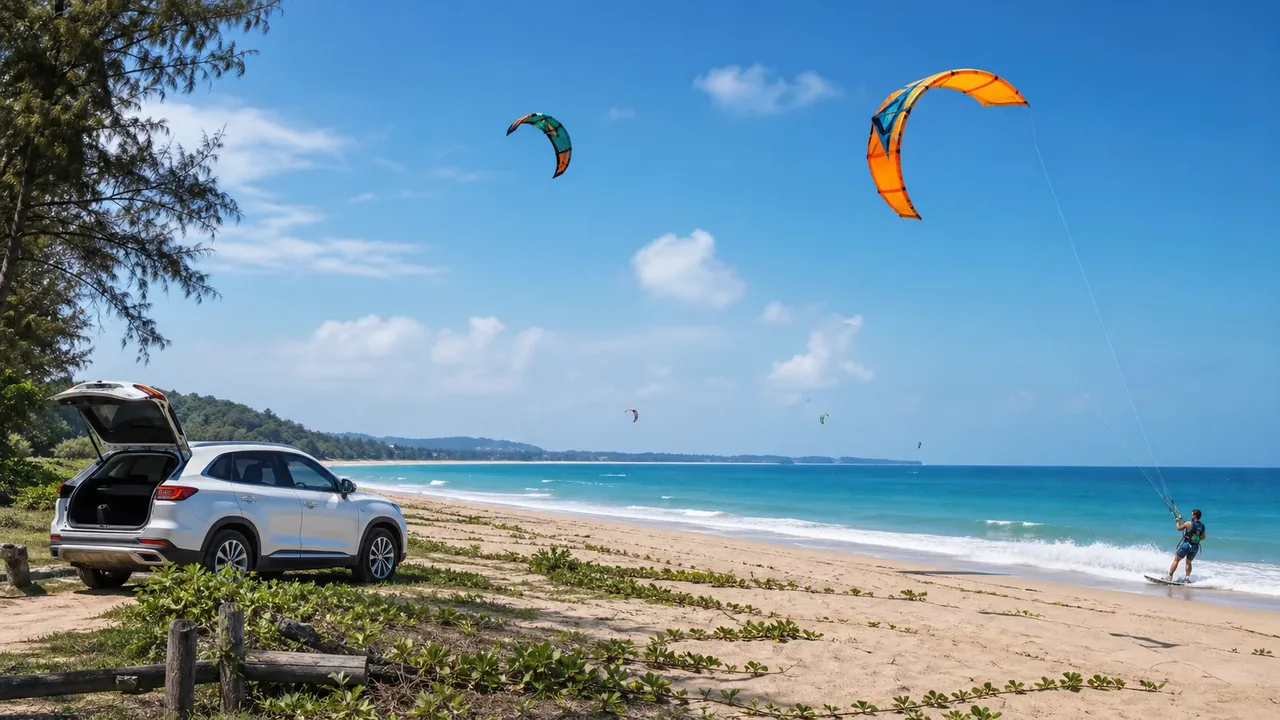
Nai Yang Beach in northwest Phuket, inside Sirinat National Park, is the island's premier kitesurfing spot: steady, stable wind of 12–18 knots from May to October (the southwest monsoon), flat water in a large sheltered lagoon behind a coral reef, and a sandy bottom free of rocks and corals in the riding zone. All the local kite schools with international IKO certification work here — from a first try on a trainer kite without water or gear to a full course with independent riding and tricks. During the monsoon season, when the rest of Phuket has 'bad' beach weather, Nai Yang comes into its own. After a session, enjoy lunch at one of the beach cafés with a view of the planes landing at HKT.
Getting there from Patong
30 km and 50 minutes from Patong heading north on route 402 over the Kathu pass, past the airport, then turn off at the Nai Yang Beach sign. From Chalong and Rawai it's 1 hour, from Karon and Kata 50 minutes, from Kamala and Surin 25, from Bang Tao 15, and from the airport itself just 10 minutes. The road is good and straight, and the beach car park is large. Parking at the kite schools (Kiteboarding Asia, Kite Zone and Phuket Kitesurfing School at the northern end of the beach) is free and shaded. Within Sirinat National Park there's a 200฿ car charge for entering the zones with the turtle centre, but the kite zone itself is free. The beach has toilets, showers and cafés. The rental spots and schools are immediately visible — with large signs.
Schools and prices
Kiteboarding Asia, Kite Zone and Phuket Kitesurfing School are the three main operators with international IKO certification, standing right on Nai Yang beach and immediately visible. A trial lesson on the harness and trainer kite without water (2 hours of basic theory, practice on the shore and trying a small kite) is 2,500–3,500฿/person — perfect for finding out whether this is your kind of activity. A full IKO Level 1+2 beginner course (9–12 hours of instruction over 2–3 days) is 12,000–22,000฿ for private or group format, after which you receive an international IKO certificate. Equipment rental for independent riding, if you're certified, is 1,500–2,500฿/day (kite + board + harness + safety leash). A personal watch instructor to help you progress is 2,500฿/hour.
When to go
The season is strictly May–October — in the dry season of November–April there's virtually no wind (3–5 knots, not enough for kiting) and the schools close or run only theory lessons. The best months are July–September, when the southwest monsoon is stable and predictable. In the morning (8:00–11:00) it usually blows 10–12 knots — ideal and safe for beginners and basic training. In the afternoon (13:00–17:00) the wind builds to 18–22 knots — for progress and tricks, for experienced kiters and advanced students. For forecasts use windy.com and windguru.cz, and refer to the HKT Airport station. After heavy thunderstorms with downpours, kiting stops for 1–2 hours — lightning is dangerous. It's best to plan your training over at least 2 days.
What to bring
Cash in small notes or a card to pay for lessons and rental (most schools accept both, but small cash is handy for food and drinks). Wetsuit shorts or a swimsuit with hip protection — the water is 28°C, so the suit isn't for warmth but to prevent chafing from the harness and sunburn; the schools provide rash guards. Reef-safe SPF 50+ sunscreen — several hours on the water guarantee a burn without good protection, and oxybenzone is banned in the national park's corals. A cap on an elastic strap on a long cord, and glasses on a cord. A change of clothes and a quick-dry towel. Drinking water in a large bottle — the effort is serious and dehydration is real. A snack (bananas, nuts) for long sessions. A power bank and a dry bag. A first-aid kit: plasters for harness blisters, and ointment for burns and bruises.
A bonus along the way
After a kite session, lunch goes down well at The Coast Restaurant in the JW Marriott Phuket Resort right on Nai Yang beach (premium seafood menu, 800–1,500฿/person) or at one of the Thai cafés by the beach for 200–400฿ for two. At the southern end of Nai Yang beach a panorama of the airport runway opens up — planes come in to land right over the sea; the actual beach beneath the planes, Mai Khao, is 5 minutes to the north. After a light dinner, the Soi Dog Foundation is 10 minutes away for a change of pace, Splash Jungle water park for families, or the Sarasin Bridge for sunset with seafood. A full northern day: Nai Yang in the morning, lunch, then your pick of the island's northern spots.
The highlight of the route
The main find of the trip is The best kite spot on Phuket. It is worth the trip, and we recommend planning your timing around it: arrange your arrival so you can take the place in without rushing.
Where to eat nearby
We picked trusted restaurants in the area — to stop by before or after your trip.


PRU
★ 4.7The only Michelin star on Phuket

How to get there
A rental car is the easiest way: the route point opens in Google Maps with one tap below. Choose a car right from here — a crossover is better for mountain roads, a compact hatchback is enough for the city.